Leona Lewis: I don’t care what they say I’m in love with you. They try to pull me away, but they don’t know the truth. My heart’s crippled by the vein, that I keep on closing. You cut me open and I keep bleeding, keep bleeding love keep bleeding keep keep bleeding love keep bleeding, keep, keep bleeding love
I’ve had snakes tossed at me twice myself. Once during an animal demonstration at the zoo when the keeper holding a corn snake had a sudden and very intense hiccup, and once on an extraordinaily ill-fated middle school backpacking trip when one of the other girls thought she was picking up a necklace in the bushes and instead picked up a garter snake and panicked.
I’ve also had spiders, birds, cats, lizards and on one particularly memorable occasion, a small shark lobbed at me on acident. It happens, and cake is an appropriate way to apologize.
A shark?!
So when I was a kid, my ADHD was… much more visible to others than it is now- lots of physical stimming, climbing on stuff, starting a sentence on one topic and ending on another while leaving out the middle, poor impulse control and emotions at roughly 5000%. I didn’t get into trouble per se- I did well in school and didn’t get into fights but I was an extremely ODD child and probably very difficult for the more neurotypical kids to get along with.
This wasn’t an excuse for Anna to constantly tease and bully me, calling me things like “Retard” and “Freak” and organizing my social ostricization, and it DEFINITELY wasn’t an excuse for her mom, leader of the local girl scout troop to tell my mother, in front of me, that “She needs to get that condition treated so I know she isn’t a danger to the other girls before we can let her join.”
So my mom did what any reasonably pissed off woman would do for her extremely odd child and enrolled me in every Science and Outdoor summer camp she could, which is how I got to go to Marine Science Camp, which is hands down the best fucking thing I ever went to.
It was run out of a university research outpost to fund and get free labor a bunch of marine research in the San Francisco Bay, which means instead of being in a disused daycare with a bunch of bored highschoolers, I was hanging out at a combination marine science museum and spceimen zoo with a bunch of hyperinvested grad students. There was a gray whale skeleton, an above ground pool full of leopard sharks, the fiberglass dummy from Free Willy that one of the professors had stolen off the studio lot, and a semi-functional robot submarine we could drive around the part of the bay the camp was on. There were animal dissections, mucking about in tidepools, and lessons on the higher ed aspacts of marine bio, whcih was fantastic for my hyperfixating ass and the other 20-odd kids, pretty much none of whom could reasonably be called “neurotypical”
The BEST part was every week we’d go out on the university research boat and do the grad student’s transects for them. (A transect, for those of you that aren’t huge nerds, is when you pick out a designated swath of enviornment, AND COUNT EVER SINGLE SPECIES IN IT. fun time!) I didnlt KNOW thats what we were doing until years later when we went to do transects for AP Bio, but when you’re eight and the camp grad students say “Wanna run a net through this section of bay then identify every single animal in this bucket?” which means you get to handle the fish and Do A Real Science, YEAH THAT SOUNDS FUN BRIAN. HIT ME WITH THAT DICHTOTOMUS GUIDE AND A BUCKET OF PERCH.
So we’re out on the boat, hauling in the net and it’s… unusually heavy. this usually means we picked up a bunch of seaweed but whatever. Grad student Brian is getting us all hype about the net becuase he and his slipped disc are real glad he’s got a dosen kids to pull this in. He grabs the bag at the end with all the fish and whatnot in it the dump it into the sorting tank before the job of identifying everything is farmed out to us, and the bag is THRASHING.
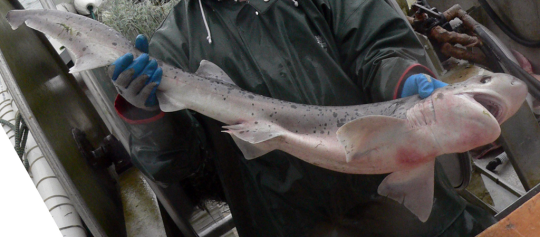
“Looks like we got a shark!” says Brian, wildly excited by this. You never grow out of your love of sharks. Sure enough when the bag was opened, out spilled a multitude of anchovies, perch, small midwater fish and a four-and-a-half-foot-long Sevengill Shark.
It looked pretty much like this one (image source)
“HOLY SHIT.” Said Brian, swearing in front of the children becuase during the 80′s the sevengill had nearly gone extinct in The Bay, and this was the mid-ninties, so seeing them again was very exciting. “WE GOTTA TAG THIS THING.” He said, grappling the shark as it tried to make the best of the situation and hork down as much perch as possible. He got ahold of it, and started to jog up the boat to get it to the Big Tank but since he was ingoring Boat safety by not holding onto the rail AND running, he slipped on the stairs, probably cracked his patella, and accidentally lobbed the shark into the air.
Sharks are, strictly speakling, hydrodynamic and not areodynamic, but thier sleek bodies and fine tooth-like scale also do an excellent job letting them sail through the air on the rare occasions they are accentally lobbed at crowds of children by overexcited grad students, and the sevengill arced gracefully though the air, tail flapping in a vain attempt to steer, and landed nose-first, directly into my right eye socket.
A Sevengill is not an insubstantial animal and I was a pathetic waif of a child so the impact knocked me clean off my feet, but I had exactly enough presence of mind to think that I didn’t want the poor shark hitting the rough deck surface or flopping overboard before we could tag it for Science, so I managed to wrap my little arms around the thing, cradling it against my chest as I slammed into the deck, the open mouth of the extremely confused fish cutting a very dramatic slice into my cheek.
The next few minutes were a blur of screaming children, screaming adults and flailing shark but it got into the big tank safely and I managed to convince the grad students it hadn’t bit me that badly as I stood there, blood gushing down my cheek and onto my shirt.
Eventually things calmed down and Brian hobbled over to me and, after apologizing roughly twenty times for throwing a shark at me, asked if I would like to help the adults tag it, since I’d been so Brave?
WOULD I?
It was to my immense glee that I’d be going right after Anna in out baby’s-first-powerpoint-presentations about What We Did That Summer, so once she finished boring everyone with her trip to see a cousin get married in tenesee or something, I got to go up and show everyone the picture of me, surrounded by half a dozen grad students, holding up a shark almost as big as me, with the radio tracker I’d personally gotten to secure to it’s extremely bewildered head, still bleeding, and tell everyone about CATCHING AND TAGGING SHARKS FOR SCIENCE, AND SOMETIMES GETTING BITTEN, A LITTLE.
I never did get an apolgy cake from Brian but that vengence was so much sweeter.
(If you like these stories and would like to supoort me and my caffiene habit, please consider donating to my Ko-Fi or PayPal. Thanks for reading!)
I’ve been getting some questions about transformative justice lately, so here’s an attempt at a quick 101 of what that means. It’s a first draft, a work in progress.
Transformative justice is build on the belief that we all generally want to be liked by the people around us and want
those people to be okay. The stronger our sense of connection, the more likely we are to want to help and not harm people. So we generally do not do harmful actions unless there are root causes, like:
Some examples of root causes:
We do not understand that our actions are harmful
Our basic needs are not being met (could be physical needs, mental health needs, etc)
We are hurting in a way that isnt acknowledged and are lashing out as a result
We reproduce a harmful oppressive system (sexist
violence, racist violence, transphobic violence, etc)
… other root causes that I’ve forgotten right now
Punishment
does not solve any of these causes. Punishment can make us too afraid
to act for a while, but in the end, if these reasons are not adressed,
our harmful behavior is going to keep coming back.
But just
as importantly: because punishment is forced upon the punished, it can
only happen when the punisher has more power than the punished. Punishment is a matter of who has the power to punish, not of who
is right or who is deserving of punishment. Generally, punishment doesn’t happen to the bad people, just to
those without the power to avoid being punished. Punishment maintains existing power imbalances and creates new
power-imbalances, new harm, new wounds, and as a result new harmful
behaviors. Punishment perpetuates harm.
So, what is the alternative?
Well, transformative justice relies on 3 things:
Protecting the victim and giving them space to heal (sidenote: there isn’t always a simple victim-actor binary)
Protecting the community and giving it space to heal
Working with the harmful actor to see what is needed
Focussing on the last two parts here, transformative justice means having genuine honest conversations with the harmful actor to achieve for example:
The realisation in the actor that the behavior is harmful and needs to change
The
realisation in the community that someone’s basic needs were not being met
and that needs to change
The realisation
in the community
that someone’s hurt was
not acknowledged and
that needs to change
The unlearning in the actor of the oppressive behaviors that prompted the harmful behavior
The realisation
in the community
that there was no real harm and that the behavior that broke the ‘rules’ was never harmful to begin with and the ‘rules’ need to change
A combination of these things
In short, if there is harmful behavior, it means something about the way
we have organized our society probably needs changing. Often other things that can not directly be identified as ‘root causes of harmful behavior’ come up, like ‘a person that was lashing out was able to recruit a group of friends in their harmful behavior’ and those things then need to be adressed. Transformative justice isn’t just about the actor, it is about the whole community.
Where there is harm, there is also disconnection. Pain, anger, broken trust. So identification of the root causes is followed by transformation. Meaning the root causes of the harmful behavior are removed and the connection between actor and community is restored.
The goal of transformative justice is NOT that the harmful actor puts on
a show of the right apologies and demonstrations of change. It’s not a
performance of accountability. Transformative justice is about creating actual, messy,
slow, imperfect change. Remorse is not a required component. The goal isn’t a specific emotion or act, it’s reaching a situation where no new harm will occur and connections are restored.
It’s hard work, for the harmful actor and for
the community. It is generally not fun. When it is done by a group of people who have grown up in a culture of revenge and punishment, it’s very very difficult work. Since we we’re already making lists, here are some..
Common pitfalls:
We don’t always have the resources to address the needs that are not being met, whether they are physical needs or mental health needs.
We don’t always have the skills needed to really listen to each other, to find root causes behind harm, to work on genuine healing, etc. We’re quick to fall into familiar patterns of punishment & revenge or demanding ingenuine performed apologies so that we can have simplicity and closure.
Transformations are often slow and unclear, creating a long period
of uncertainty.
There is no clear sense of when it’s over or whether a harmful actor is putting enough effort into ‘dealing with their shit’. If someone is lashing out as a
result of a lifetime of abuse or a deeply engrained oppressive dogma,
they’re not likely to become perfect in a short time. Protecting victims
and the community during that long period is difficult. Transformative
justice can be emotionally draining on everyone involved over a long
period of time. It is difficult to maintain. It doesn’t have big
spectacular success stories and very little recognition.
Working with the harmful actor to achieve transformation means listening to
someone who has done harm and genuinely trying to understand their point of view. This can bring a lot of discomfort and is something a lot of us who say we want transformative justice are ultimately unwilling to do. Transformation of an actor also results in a real reconnection of bonds between the actor and the community once the transformation has taken place. Are we willing to do that?
Participation of the victim should always be voluntary. A person healing from a very harmful thing definitely shouldn’t be pushed to participate. At the same time, some victims might really want to participate in the transformative justice process but may be unwilling or unable to deal with the messy process of genuine conversations with an actor and the flawed process of transformation it involves. Giving victims agency but also allowing the actors transformative process to take place is difficult.
We’re not very good at recognizing the difference between mutual harm
and victim-actor binaries. We often end up dealing badly with
cases where that is unclear. When the actor has a marginalized identity that the victim does not have, we’re often very bad at recognizing actor and victim.
We’re often unwilling to admit the role favoritism, personal bonds and popularity plays in how we respond to the need for a transformative justice process. A person who is well liked may get a lot more support in their transformation that a person who is not. The amount of energy we’re willing to spend on someone varies.
The community may be unwilling to change parts of its culture that are consistently creating new harmful actors. For example: an community that glorifies physical strength, fighting skills and a warrior attitude is going to have to problems with that again and again. A community that focusses on performative call-outs as a way of demonstrating your ideological purity is going to be very bad at genuine transformation.
And there are more pitfalls.. so yeah, it’s complicated. It’s a lot more complicated that kicking people out or building prisons.
But while punishment is ineffective and thus required again and again and again, transformative justice creates lasting change. And because it doesn’t just change the actor, every transformative justice process also creates a better community that is better capable of preventing harm in the first place.
To round up
Transformative justice is as old as human community itself and there are many different transformative justice techniques out there. Some
rely on an outside ‘impartial’ negotiator, others are victim-led, some
require that the actor in some way repairs the damage done while other
methods reject this notion. But in general transformative justice is about:
Safety, healing, and agency for victims
Transformation for people who did harm, resulting in meaningful reconnection to the community
Community transformation and healing
Transformation of the social conditions that perpetuate harm
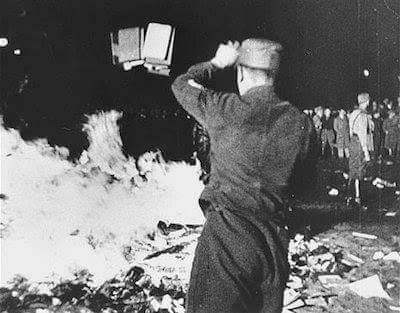
This photo is usually divorced from its specific content. It is the most famous image of Nazi book burning. Most people assume the specific books don’t matter. The horror is at the notion of destroying books, any books, which I can certainly understand. But let’s talk about what was in them anyway.
This image shows Nazi-aligned vigilantes (not, incidentally, government agents) destroying the library of Magnus Hirschfeld’s Institute for Sexual Science. Hirschfeld was the founder of modern transgender theory, and it is his displaced students who founded transgender advocacy in the US. Destroying this library destroyed the first central hub of transgender advocacy in the world. This loss is not an inconvenience. Parts of that library can never be replaced.
In the 1910s Earl Lind read one of the books from that library and wrote for a feminist magazine that mothers ought to raise their trans children according to their endorsed gender (as Lind said, their “mental sex”). One hundred years ago there was a movement to normalize trans people. It was based on scientific study and the assertion that the policies of a just society should be based on sound evidence, and sound evidence showed that gender variance was perfectly natural and perfectly healthy. That movement is what was displaced when Nazis stormed the library and burned all the books they found.
We recovered from the loss of Hirschfeld’s collection, eventually. We are once again at a place where people write to feminist journals extolling parents (no longer mothers!) to raise their trans children according to the genders of their hearts. But suppressing trans existence is so visible at the heart of the party that just came to power in this country. We’ll see what happens next.
Copied from Facebook user Han Koehle
Source: Stryker, Susan (2008). Transgender History. Berkeley: Seal Press






 vanhalenofficial