Every year, teachers spend on average $500 on their classroom of their own money. I know many teachers who spend considerably more. Each year, I request links to wish lists from the teachers on Tumblr to share; we call it Teachmas. It is wonderful to have support from all over as we prepare for the new school year. Please consider purchasing an item, if money is tight, reblogs also help! Thank you so much!
im still working on that paper on government regulations of GMO crops and its just…..really fascinating. i feel like i just….wasn’t very well informed about exactly how these plants interact with environment and with people before, although ive heard vague arguments about legality and possible dangers one way or the other tossed back and forth a lot. the regulation in a legal sense is done by USDA APHIS under title 7, chapter 104 (the Plant Protection Act), and it’s very messy and very interesting. for example, i’ve heard a lot about the ‘intellectual property’ legal case with Monstanto, but i just learned about the supreme court case Monsanto Co. v. Geertson Seed Farms, which concerns the actual regulation of some of these products.
background: the issue in this case is if GMO crops could cross pollinate with non-GMO crops and introduce those genes inadvertently into nearby wild/organic populations. this is a big factor of what people mean when they say ‘GMO crops could hurt the environment’ (wether or not it could actually cause harm is another thing that kind of is on a more case-by-case basis with the gene involved and stuff).
from there:
1. if you are a company wanting to mass-produce ur GMO crop, then u put that crop through years of development and then contact USDA APHIS, who sends people out to put it through it’s paces and make sure that it’s not going to fuck anything up/hurt people. usually by this point the company is 600% sure that it’s safe, because the entire regulatory process costs a lot of money and you don’t want to put just any old crop through that just to have it fail.
2. again, USDA APHIS runs under title 7 chapter 104, which classifies GMOs as ‘plant pests’ (this wording gives APHIS the legal jurisdiction to screen them like they do). BUT because of the technical meaning of ‘plant pest’ in another law, a GMO is only a GMO if it contains DNA from another organism. so if you take DNA from the same plant and move it around/modify it, you can petition USDA APHIS to declassify it as a plant pest,meaning that the particular crop becomes completely deregulated and can just kinda….do whatever, get planted whatever, etc and is completely out of the jurisdiction of the department. (it should be noted that this is kind of viewed as a loophole, because one of the concerns about genetic engineering is that by moving genes around the genome, you could accidentally insert it into another gene and break it’s function, causing unintentional adverse affects.)
3. this wording also means that USDA APHIS also has to abide by NEPTA, the National Environmental Policy Act of 1969, which states that if APHIS gets petitioned to deregulate a crop, before they do anything they first have to do an environmental assessment of the crop that is wrapped up in a report saying ‘yea u good, because all our tests came back negative, ur plant is now Free’, ‘you are not allowed to grow this, because of x reasons, your plant must remain under our regulations’, or ‘you are allowed to grow this Wherever and do Whatever, but only in certain places where you can be sure x things won’t happen, if you grow it outside those zones then its back under our jurisdiction’. if USDA APHIS decides that it’s safe enough, they can allow the crop to enter deregulation before the environmental assessment is finished.
so it’s 2004, and Monstanto has an alfalfa crop variety that’s Roundup Ready (meaning that it’s resistant to their patented herbicide Roundup, and if you have it planted you can spray the field with that herbicide and kill everything but the crop. they have a few different kinds of crop like this but this case concerns their alfalfa variety). they decide ‘hey, lets go petition the USDA for our crop to be deregulated so we can do Whatever We Want with it’. the problem here is that alfalfa is open pollinated, meaning that it’s naturally pollinated insects…..that also pollinate other alfalfa nearby. alfalfa that may not be GMO. alfalfa that may, in fact, be organic…..which, by federal regulation, cannot be GMO. APHIS looked over the case and did an assessment and was like ‘yea sure sounds good’ and started the process of deregulating the crop.
organic farmers in california noticed this, and they were like ‘that’s not very cash money of u’. so in 2006, Geertson Seed Farm and a few other organic farms rallied together and went to the california district court and were like ‘we dont think APHIS’s environmental assessment was enough, and we think that they should conduct a more thorough investigation, and during that investigation they should stop the process of deregulating the crop’. the court was like ‘yea that sounds reasonable’, ordered APHIS to conduct a new investigation, and ordered that Monstanto would not be able to plant any more of that alfalfa until APHIS had finished said investigation. monstanto was like ‘can you just like, partially deregulate it so we can like, plant it in some places at least?’ and the court was like ‘No™’.
monsanto Did Not Like This. they appealed to the california appeal courts, who in 2013 also said No™, and they still Did Not Like This, so they appealed to the u.s. supreme court, who was like ‘yea ok you can plant it in some places until APHIS finishes the assessment, because Geertson Seed Farm didn’t actually like….have any harm done to them, and we’ve decided that they need to show harm before they can demand that it not be deregulated’. they also decided that cross-contamination between organic and GMO crops does not qualify as harm done to those crops, because ‘harm’ in the context of a ‘plant pest’ is widespread physical damage and destruction of other plants, and changing the genome of a plant like that is not physical damage, which is….a really interesting conclusion that brings up a lot of questions, tbh. i’ve been thinking about it a lot lately, like….this is pretty strictly adhering to just the damage imposed on plants, and doesn’t branch out to consider how cross contamination could impact organic farmers economically through potentially having their crops deemed non-organic do to no fault of their own. i also feel like this is one of those cases where it could have some Wild Ass implications if it ever comes up in a human or animal context, although i can’t say exactly what that might be.
u kno lads……..i used to think i knew some things about what a ‘spore’ was. u kno? like a spore? like what ferns and fungi reproduce with? like seeds but anatomically different? i used to be like, ‘ah, a spore, a microscopic packet of information that is different from a seed’. o how foolish i was my lads.
if you’ve been following me for a little bit, you might know that i’m writing a term paper on the plant family isoetes, which is a really small, niche, prehistoric family that garners a lot of interest in some parts of the botanical community. isoetes is one of the hardest plant families ive come across to talk about and explain because its so incredibly Fucked Up in just like, so many ways, like oh my god, but it’s in the same broad taxonomic group as ferns to give a basic starting point, and from there:
now, as i noted above, isoetes has spores, not seeds. it has sacs of spores at the base of its ‘leaves’ that mature, then split off from the plant itself to go root downstream:
because like that makes sense, that’s obviously the best and most effective way to make reproduce (why not? why the fuck not? isoetes does not abide by our puny human rules of how a plant ‘’’’’’’’probably shouldnt’’’’’’’’ reproduce)
now i have never seen a real, live isoetes with my own eyes. i’d seen a lot of pictures in the books i was looking through, and i’d read a lot of stuff explaining how to identify them using their spores, and i’d also read that the spores were large, as in, some of the largest in the plant kingdom. then, i decided that i needed to see this plant for myself, and the best way to do that was to look at some of the specimens in my university’s herbarium.
but i just was not prepared. i was not fucking prepared for seeing what isoetes spores actually look like. im still absolutely Shook.
ive done my best to make a size reference here by putting a paperclip on the herbrium sheet. this plant has it’s leaves still attached, and on this particular specimen of the pouches has broken open and spilled out the spores themselves. which i then had to witness with my own two eyes.
behold:
this is the plant (it’s an older specimen that’s a little beaten up, but you can see the roots just below the paperclip and the remains of the tips of the leaves up top). the paperclip is rested on the ‘pouch’ sections. under a microscope:
*take a look at that snout voice* TAKE A LOOK AT THOSE SPORES!!!!!!!!!!!!!!!!!!
more absolutely wild to me was that not only could u see the spores at like, 25x magnification on a microscope (seriously like they’re big enough that you could prob see them on ur fingers with ur naked eye) but that you could see the defining features. this was what they were talking about when they were talking about how to identify them with their spores!!!! this is fucking wild like look at this shit:
OKAY SO HERE ARE THE PICS. Inspired by this post by @pipistrellus (@pipcomix)
These are 16th century Renaissance inspired hotpants, panelled with navy velvet with a red silk lining and hand-embroidered butt slogan, which I believe is like 300% historically accurate. They’re actually modelled off a genuine Tudor pattern but then made ridiculous because who am I.
Worn with thigh highs and a 18th C shirt cuz it was all I had to hand and frankly shirts don’t change that much lol.
My face is having uncontrollable spasms. Great. It hurts really, really, really bad.
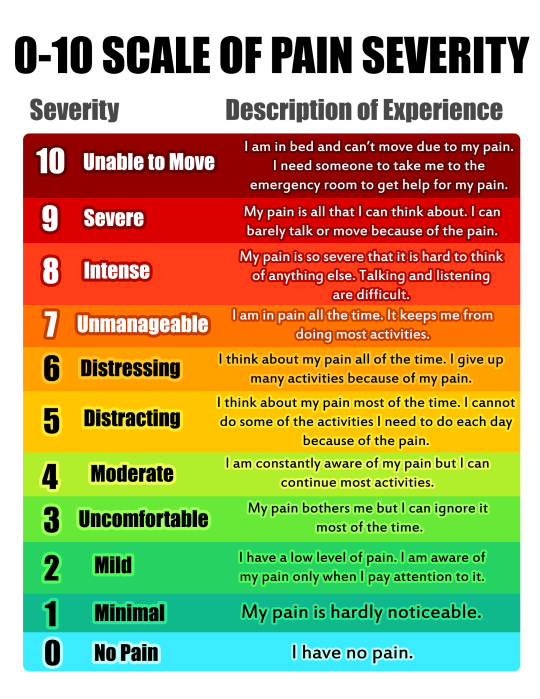
I think part of why I have trouble explaining pain to the doctor is when they ask about the pain scale I always think “Well, if someone threw me down a flight of stairs right now or punched me a few times, it would definitely hurt a lot more” so I end up saying a low number. I was reading an article that said that “10” is the most commonly reported number and that is baffling to me. When I woke up from surgery with an 8" incision in my body and I could hardly even speak, I was in the most horrific pain of my life but I said “6” because I thought “Well, if you hit me in the stomach, it would be worse.”
I searched and searched for the post this graphic was from, and the OP deactivated, but I kept the graphic, because my BFF does the same thing, uses her imagination to come up with the worst pain she can imagine and pegs her “10″ there, and so is like, well, I’m conscious, so this must be a 5, and then the doctors don’t take her seriously. (And she then does things like driving herself to the hospital while in the process of giving birth. Probably should have called an ambulance for that one!)
So I found this and sent it to her. Because this is what they want to know: how badly is this pain affecting you? Not on a scale of “nothing” to “how I’d imagine it’d feel if bears were eating my still-living guts while I was on fire”.
I hate reposting stuff, but I’ll never find that post again and OP is deactivated, so, here’s a repost. I can delete this later, i just wanted to get it to you and I can’t embed images in a chat or an ask.
This is possibly why it took several weeks to diagnose my fractured spine.
Pain Scale transcription:
10 – I am in bed and I can’t move due to my pain. I need someone to take me to the emergency room because of my pain.
9 – My pain is all that I can think about. I can barely move or talk because of my pain.
8 – My pain is so severe that it is difficult to think of anything else. Talking and listening are difficult.
7 – I am in pain all the time. It keeps me from doing most activities.
6 – I think about my pain all of the time. I give up many activities because of my pain.
5 – I think about my pain most of the time. I cannot do some of the activities I need to do each day because of the pain.
4 – I am constantly aware of my pain but can continue most activities.
3 – My pain bothers me but I can ignore it most of the time.
2 – I have a low level of pain. I am aware of my pain only when I pay attention to it.
1 – My pain is hardly noticeable.
0 – I have no pain.
It’s also really important to get this kind of scale to people who have chronic pain, because chronic pain drastically lowers your perception of how “bad” any kind of pain actually is, and yet something like this pain scale is extremely user friendly.
For example, if someone asked me how much pain I’m in at any given time, I’d say hardly any, and yet I’m apparently at a chronic 2.5, and it only goes up from there depending on the day.









 vanhalenofficial